
DISCLAIMER: This website provides content for informational and educational purposes only. No information on this site constitutes professional advice, and you should consult a qualified expert before making any decisions.
AFFILIATE DISCLOSURE: Some links on this site are affiliate links. If you click on them and make a purchase, I may earn a small commission at no extra cost to you. I only recommend products or services I believe will add value. Thank you for supporting this content.
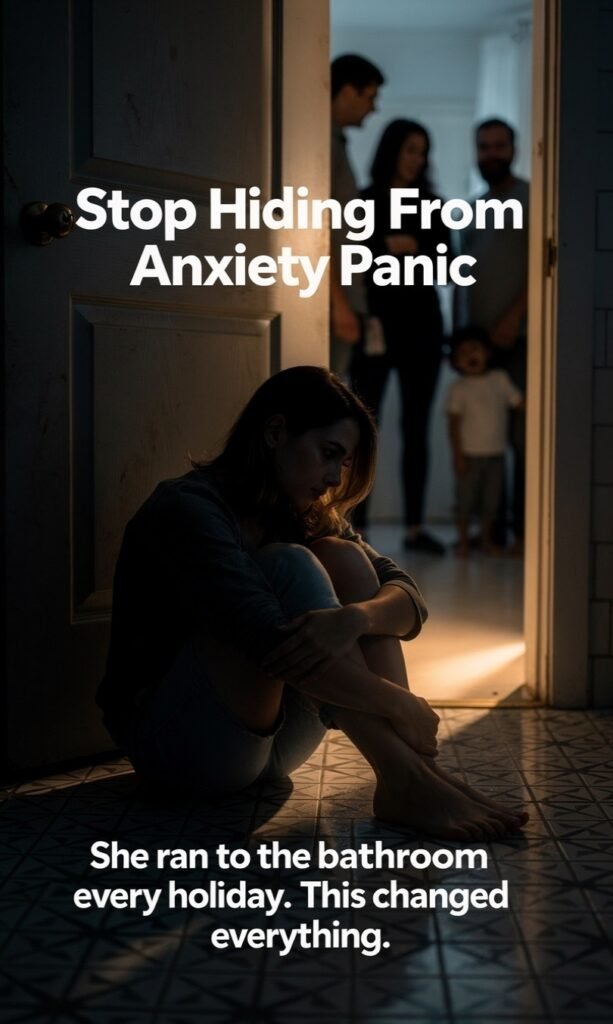
I remember curling up on my bathroom floor, knees to my chest, while my family laughed in the dining room.
That cold tile felt safer than any hug. Every holiday invitation sent my heart racing. I missed birthdays, Thanksgivings, even my own sister’s graduation party. I was hiding from my own life. But here is the truth I learned: hiding keeps anxiety alive. And you can stop hiding, even if right now you feel stuck behind that closed door.
Over the last eight years helping people just like you, I have seen the same pattern. We hide in bathrooms, bedrooms, cars, or anywhere that feels small and safe. But the moment we step out, the panic rushes back. Until we learn a different way. This guide will show you exactly how to stop hiding from anxiety panic using gentle, step-by-step methods that actually work. No pressure. No judgment. Just real tools that helped me host Thanksgiving for twelve people last year.
1. Why Hiding Makes Panic Stronger
When you hide during anxiety or a panic attack, your brain learns that the only way to feel safe is to escape. Each time you run to the bathroom, your mind writes a note: “That party was dangerous. You survived because you left.” But the danger was never real. It was just a surge of fear chemicals. Hiding trains your brain to fear more situations, not fewer. This is called avoidance, and it shrinks your world one dinner at a time.
- Hiding in bathrooms becomes a secret safe zone
- Missing holidays teaches your family to expect your absence
- Every avoided event makes the next one scarier
- You lose trust in your own ability to cope
But there is great news: you can reverse this pattern. The brain can learn new safety signals. And you do not need to push yourself into terror to heal.
2. My Story: From Bathroom Floor to Hosting Thanksgiving
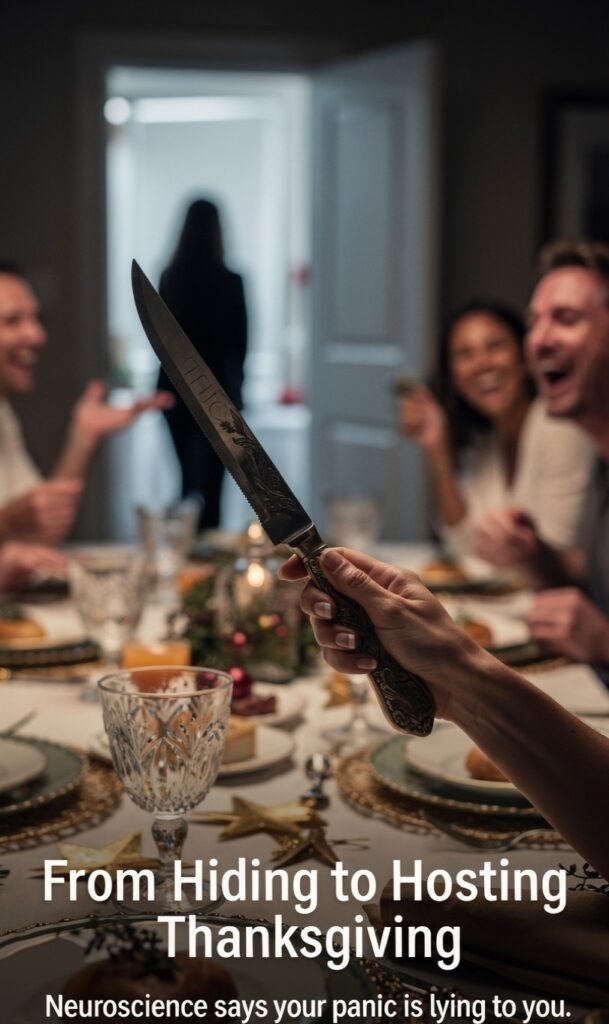
For two years, I hid during every family dinner. The bathroom was my refuge. I would sit on the edge of the tub, counting tiles, listening to muffled laughter. I missed every holiday. Then I started learning about a gentle method called graduated re-entry. Instead of forcing myself to sit through a whole meal, I started with just stepping out of the bathroom for 30 seconds. Then I stood by the kitchen door. Next, I sat at the table for five minutes. Small wins built big courage. Last week, I hosted Thanksgiving for 12 people. I cooked the turkey. I carved it in front of everyone. And I did not hide once.
That transformation is possible for you too. Not because you are special, but because the brain follows predictable rules of learning. And we can use that to your advantage.
3. The Gradual Re-Entry Method That Works
This is the same science-backed approach that helped me and many others. Start where you are comfortable, then take tiny, brave steps. No leaps. No cold turkey. Just gentle expansion.
| Step | Action (Start Here) | When to Move Forward |
|---|---|---|
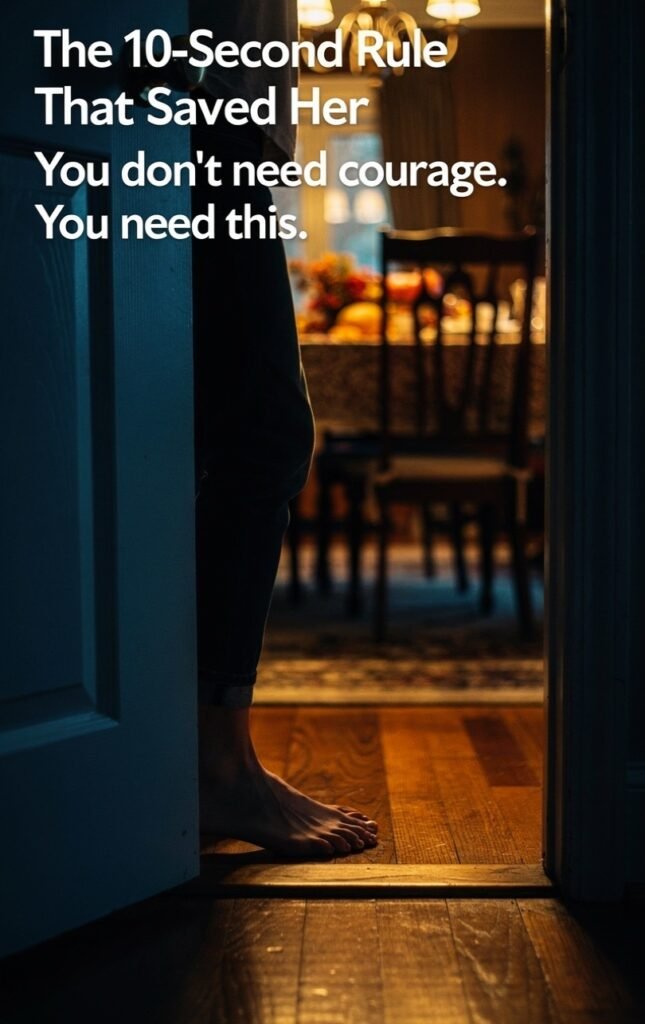
| 1 | Open the bathroom/bedroom door for 10 seconds while family is nearby | When your anxiety drops below 5/10 |
| 2 | Stand in the doorway for 1 minute, then return to safe spot | Repeat until it feels boring |
| 3 | Sit at the edge of the social area for 3 minutes | Practice 3 times before increasing time |
| 4 | Join for one full dish (like appetizers only) | Celebrate every small success |
| 5 | Stay for 15 minutes of a meal, then excuse yourself politely | Build confidence over weeks, not days |
This method works because you never flood yourself with fear. You teach your nervous system: “I can handle this.” And each small victory rewires the panic response.
4. Why Family Reintegration Feels Hard (And How to Make It Easier)
Family knows your hiding patterns. They might have stopped inviting you. Or they watch you nervously. That pressure can make anxiety worse. But there are simple ways to rebuild family connections without shame.
- Send a short text before the event: “I am working on my anxiety. I may step away, but I will try to join for a few minutes.”
- Ask one trusted family member to be your “anchor.” Just knowing they are there lowers panic.
- Plan a signal (like tapping your wrist) when you need a quiet break.
- Remind yourself: most people are thinking about the food, not watching you.
If you have missed many holidays, start with a low-stakes gathering. A casual pizza night, not Christmas dinner. Then build up.
5. Tools That Support Your Journey
You do not have to do this alone. I have used and recommended these practical tools for clients. They make the process smoother.
- Anxiety & Panic Attacks Hidden Drain Solution – a complete system designed for people who hide during social events. It includes graduated scripts and daily rewiring exercises.
- Deep breathing apps like Breathwrk (free version works great)
- A simple journal to track your “doorway seconds” – each small win counts
- Calm music playlists (search “anxiety grounding” on any music platform)
Remember: tools help, but the real change happens when you take one small step toward the dinner table.
6. Common Mistakes People Make When Trying to Stop Hiding
I made almost all of these. Learn from my slip-ups so you move faster.
- Waiting until anxiety disappears: It won’t. You have to feel a little fear and move anyway.
- Trying to stay for the whole event at once: That backfires. Start with 2 minutes.
- Not celebrating small wins: Standing in the doorway for 10 seconds is a victory. Treat it like one.
- Keeping your struggle a secret: Let one safe person know. Secrecy feeds shame.
- Going back to hiding after one hard moment: That is normal. Just try again the next day.
7. What Science Says About Avoidance Extinction
Research in behavioral psychology shows that when you face a feared situation without escape, the fear response naturally drops over time. This is called extinction. The key is to stay just long enough for your anxiety to peak and then start coming down. Usually 10 to 20 minutes. Then you leave. Your brain learns: “Nothing bad happened. I can do this.” Over several practices, the panic loses its power. No medication required. No talk therapy for years. Just consistent, small exposures.
And here is the beautiful part: your brain cannot tell the difference between a real dinner and a practice run in your imagination. Visualization works too. Picture yourself sitting calmly at the table while breathing slowly. That primes your nervous system for the real thing.
8. Future Outlook: You Can Host Again
Imagine next Thanksgiving. You are carving the turkey. Someone asks for more gravy. The room is loud with laughter and clinking glasses. You feel a flutter of old panic, but it passes like a cloud. You stay. You eat. You enjoy. That is not fantasy. That is neuroscience. Every person who stops hiding from anxiety panic moves toward that image. Your future self is already at that table. You just need to take the first doorway step today.
Frequently Asked Questions
That is okay. Panic is uncomfortable, not dangerous. Have a plan: step away, breathe slowly (4 seconds in, 6 seconds out), then try again another day. Progress is not a straight line.
For most people, noticeable change happens in 4 to 8 weeks of consistent practice. Hosting a full holiday might take 3 to 6 months. Start with a small coffee with one family member first.
Yes. Many people use both. Medication lowers the baseline fear, which makes the re-entry steps easier. Talk to your doctor before changing any medicine.
Set a boundary: “I am working on something personal. Please do not comment on how long I stay. Your support helps me heal.” If they continue, bring a supportive friend as a buffer.
Suggested Internal & External Resources
Overcoming Social Anxiety Guide | Panic Attack First Aid Steps
Anxiety & Depression Association of America – Panic Disorder | NIMH: Panic Disorder Information


